Wednesday, 20 August 2014

Motivation for the `long haul'

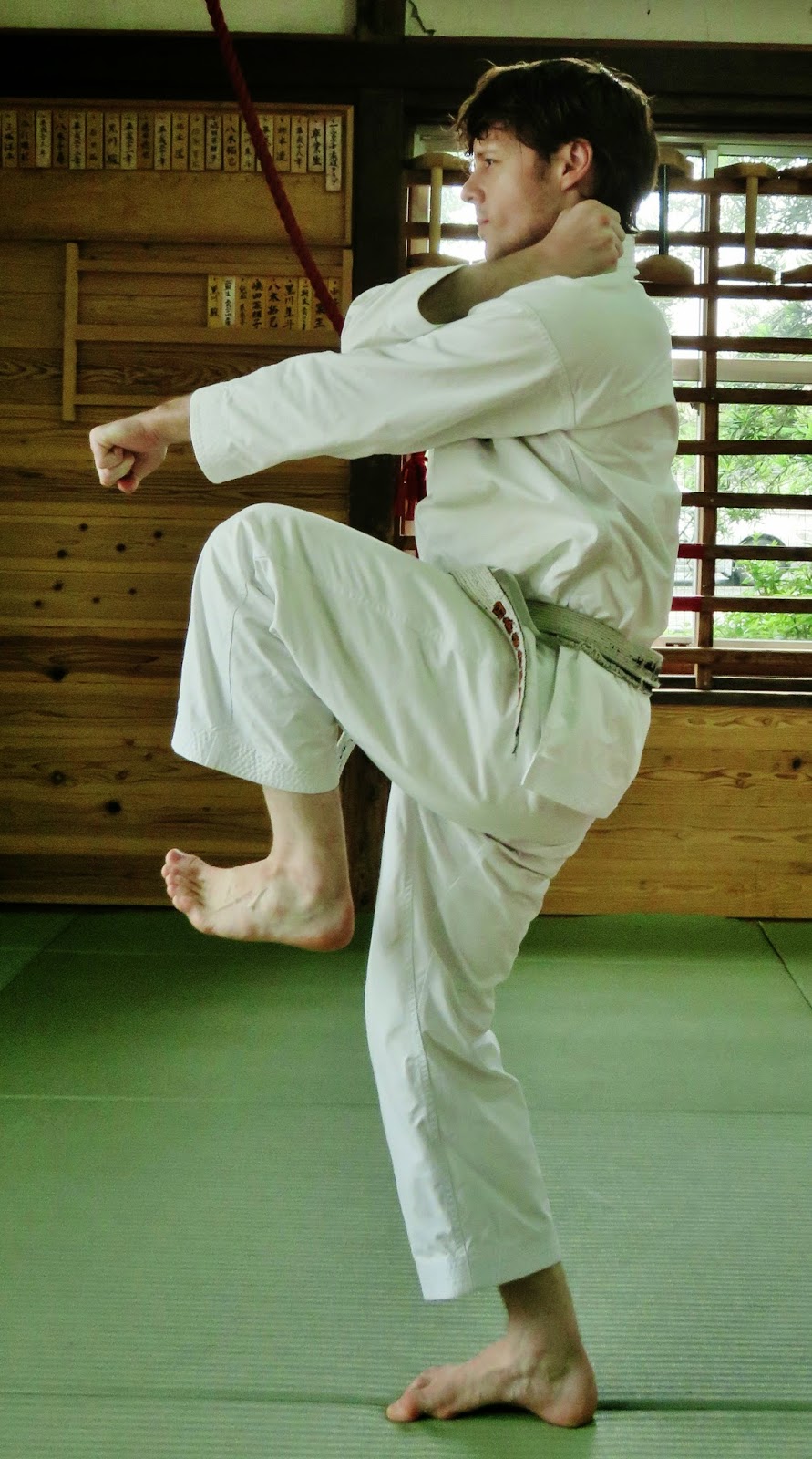
Self-practicing `hidari kizami mawashi-geri' (ido-kihon) yesterday.  
 Often people ask me “what is your key to my motivation in karate-do?” and, while I’ve talked about this before, I’d like to reiterate my mental approach today. I’d like to emphasise here that this is not `something new’, or a `new revelation’ for me. It is reflective of my training since I was very young.

Fundamentally, I believe that “…if we let go of our egos, we become liberated”; and consequentially, we gain a level of motivation which doesn’t waver and `much deeper satisfaction’ from our karate practice. Those who are better than us, we admire and respect; likewise, we do not compare ourselves to those we have surpassed (or are ahead of on the karate path).
This means that that “Your karate then truly becomes `your karate’”; thereby, setting the stage for you to bolt forward and `to really win battles against yourself’. Irrespective of whom you are, what your goals are, and any other factors, I believe this is the ultimate key to motivation in our wonderful martial art.


The ambitious junior or competitor as `a motivator’…
As the lyrics of `The Fly’ by U2 go, “It’s no secret that ambition bites the nails of success.” Some see this as a good thing, but I personally disregard this as well (as it only works to a certain level and takes one psychologically away from the highest level of motivation). Again, I’ll say it again, “motivation to me should not be about others”. That way, regardless of outcomes, the process is always emphasised over the product (or result). To me personally, this is the MEANING OF KARATE-DO: the WAY or PATH of karate. Truly, it is THE PROCESS, and quality (and authenticity) of this process, that matters most.


By and large, as I wrote in my 1996 karate-do memoirs “…don’t set the bar too low, nor too high. Set it at a height where you are challenged, but not so much that it is an impossibility”; furthermore, and just as important for motivation (and as discussed today), don’t worry about whether some can jump higher than you, or have `yet to reach your heights’. They (others) are insignificant when it comes to your karate! What matters is that “YOU KEEP PUSHING FORWARD without letting your ego becoming puffed up, nor flattened”. Focus on the process: the process of self-progression, which can only be maximised when it is "...devoid of ego that is steered and swayed by comparisons".  This, of course, transcends karate-do.
Kindest regards and best wishes, André.
Movement four of Seiryu kata during my self-practice.
© André Bertel. Aso-shi, Kumamoto, Japan (2014).

Sunday, 17 August 2014

REBOOT

Every so often I make a complete return to the start of my karate-do training. These days I like to describe it as `a self-reboot’.

Technically, at least for me—because I’m not a naturally talented karateka, not physically big, nor strong—I really need to do this; that is, to go back to the critical details of kihon and work on them in the most detailed way. Needless to say, I am also doing this via yakusoku-kumite/kihon-kumite (especially gohon and kihon ippon, but also jiyu ippon kumite); and—of course, within the `so-called basic kata’ (Heian shodan, nidan, sandan, yondan, godan, and Tekki shodan). Basic... YEAH RIGHT! Humble pie... Yes, certainly!!!

Beyond technique, I use these periods of `starting karate-do all over again’ to assess what karate-do is to me `personally’, and what karate-do truly is: in the traditional Japanese context. This aspect is something I began to do when I first came to Japan for training, at the JKA (Japan Karate Association), 20+ years ago...

At present, while I am doing this `self-reboot’, I'm continuing to practice my current tokui-gata; the four sentei-gata; oyo-kumite; and jiyu-kumite. However, these aspects are currently overshadowed by the aforementioned focal points.
 
For those, whom have followed my blog for the last seven years, you will know that this strays from my previous `reboots’; nevertheless, I am also attempting `to keep the momentum up’ from my previous months of practice. In this way, `this reboot is doing something a little different’; and therefore, adding a little spice to my training.

This process began on August 15th with a vigorous three day training stint, to commemorate eight years since the passing of my late teacher. I have much kansha for the 13 years I personally learned from him.
OSU,
アンドレ バーテル

© André Bertel. Aso-shi, Kumamoto, Japan (2014).

Friday, 8 August 2014

Deutschland Seminar Video

Below is a video from my last seminar in Germany in 2012. Like the previous video, from the United Kingdom, these YouTube uploads have essentially been to clean up my files and, hopefully, offer something useful to karateka around the world. As I always say, “we must talk with our karate-do”. In this way of thinking, via photographs and videos, I've aimed to verify my understanding; thereby, giving legitimacy to my writing/articles. The reality is that "....so many say so much, yet we never see their actual karate!"


By the way, many people are saying that since I re-joined the Japan Karate Association (JKA) I’m no longer doing what I have learned over the last 30+ years… I’d like to assure everyone that: (a) I am dedicated fully to JKA; and (b) that I practicing everything I was taught prior to returning to JKA.
Taken as a whole, JKA has been encouraging me to continue practicing my karate in the way I was: prior to re-joining. All the very best from Japan, André Bertel.

© André Bertel. Aso-shi, Kumamoto. Japan (2014).   


Thursday, 7 August 2014

Spanish karateka comes for private training

A karateka from Spain, Josu Duran, recently travelled to Japan for one-on-one training at my private dojo. He flew directly from Spain and travelled Aso-shi. During his time here I have the covered essential kihon (namely, the core Shotokan waza “… especially techniques in zenkutsu-dachi” with different unsoku/ashi-hakobi; ‘kakato chushin’; shisei/postural alignment; koshi no kaiten; tai no shinshuku; and so forth).

Expanding on this, I used several kata to work on the above mentioned kihon-waza (and generic principles). However, the main focus has been on ‘reworking’ Josu’s tokui-gata, which is currently Chinte.

On the kumite front, I have again `honed in’ on the technical points stressed in kihon. Consequently, in an attempt to reinforce this teaching, I have utilised Kihon ippon kumite and Jiyu-ippon kumite.

Kumite: jodan ushiromawashi-geri.
Overall, I can see it has been a real challenge for Josu. But what is admirable is that he has fronted up to training with me. Besides his punctuality, in regards to training times, he is a good bloke. With continued practice of the critical points, I have taken him through, he will certainly improve. Good luck (Ganbatte) Josu!!! – André Bertel.
© André Bertel. Aso-shi, Kumamoto. Japan (2014).

Teaching Josu how to do kihon ippon kumite and jiyu ippon kumite correctly; moreover, their specific training 'purposes'.

Saturday, 26 July 2014

Gojushiho Dai Kata: A generic outline

Practicing in a confined space after dojo training: one of my methods to specifically "review".
 Here is a general outline of my tokui-gata, Gojushiho Dai (五十四歩大). As you will know, Gojushiho Dai literally translates as `54 steps major’. The number 54 comes from Buddhism as it has special relevance, just as Suparinpei (Hyakuhachiho / Hyakuhappo) `108 steps’ does. With this in mind, there are two main reasons why Shotokan-ryu has two forms of `Gojushiho’ (Gojushihodai and Gojushihosho); these are: (a) to form ‘108’ pertaining to the aforementioned point; and (b) “…to physically balance training on the legs”—Gojushiho Dai loads the left leg (with migi ashi mae neko-ashi dachi) and Gojushihosho the loads right leg (with migi kokutsu-dachi). Lastly, but not least, I hope this outline of Gojushiho Dai helps you with your practice of it. As the longest kata amongst the 25 “official” JKA formal exercises, it is an extreme challenge—irrespective of one’s technical level. For more information on Gojushiho Dai please check out my recent article on it: http://andrebertel.blogspot.jp/2014/06/gojushiho-dai.html. I'd like to conclude that I am not a Buddhist, however, we must consider the historical/sociological contexts, which have influenced the development of karate-do. Best wishes, André Bertel. 
Karatedo Kata (Vol.4): This four book series is the current "BIBLE" of Shotokan Karate-Do Kata.
 A GENERIC OUTLINE OF GOJUSHIHO DAI KATA
REI: (Musubi dachi).

YOI: (Hachiji-dachi).
1.      Migi uraken Jodan tatemawashi uchi doji ni hidari zenwan munemae suihei kamae (Migi zenkutsu dachi).
 
2.      Ryo ken chudan morote uke (Hidari zenkutsu dachi).
3.      Ryo ken chudan morote uke (Migi zenkutsu dachi).
4.      Hidari tateshuto chudan uke (Hidari zenkutsu dachi).
5.      Migi chudan gyaku zuki (Hidari zenkutsu dachi).
6.      Hidari chudan maete zuki (Hidari zenkutsu dachi).
7.      Migi chudan mae keage (Hidari ashi dachi).
8.      Migi chudan gyaku zuki (Hidari zenkutsu dachi).
9.      Migi tateshuto chudan uke (Migi zenkutsu dachi).
10.  Hidari chudan gyaku zuki (Migi zenkutsu dachi).
11.  Migi chudan maete zuki (Migi zenkutsu dachi).
12.  Hidari chudan mae keage (Migi ashi dachi).
13.  Hidari chudan gyaku zuki (Migi zenkutsu dachi).
14.  Migi jodan tate enpi uchi (Migi zenkutsu dachi),
15.  Sasho gedan sukui uke doji ni usho koko gedan osae (Hidari zenkutsu dachi).
16.  Migi keito chudan uke doji ni hidari teko migi hiji shita (Migi ashi mae neko ashi dachi).
17.  Hidari shuto gedan uke doji ni migi keito kamae (Migi mae ashi neko ashi dachi).
18.  Migi chudan ippon nukite otoshi zuki doji ni sasho migi hiji uchigawa (Yori ashi: migi mae ashi neko ashi dachi).
19.  Hidari chudan ippon nukite otoshi zuki doji ni sasho hidari hiji uchigawa (Migi mae ashi neko ashi dachi).
20.  Migi chudan ippon nukite otoshi zuki doji ni sasho migi hiji uchigawa (Migi mae ashi neko ashi dachi).
21.  Migi keito chudan uke doji ni hidari teko migi hiji shita (Migi ashi mae neko ashi dachi).
22.  Hidari shuto gedan uke doji ni migi keito kamae (Migi mae ashi neko ashi dachi).
23.  Migi chudan ippon nukite otoshi zuki doji ni sasho migi hiji uchigawa (Yori ashi: migi mae ashi neko ashi dachi).
24.  Hidari chudan ippon nukite otoshi zuki doji ni sasho hidari hiji uchigawa (Migi mae ashi neko ashi dachi).
 
25.  Migi chudan ippon nukite otoshi zuki doji ni sasho migi hiji uchigawa (Migi mae ashi neko ashi dachi).
26.  Hidari haito hidari sokumen gedan uke doji ni migi shuto suigetsumae kamae (Kiba dachi).
27.  (Migi ashi mae kosa).
28.  Ryo sho migi sokumen jodan bo tsukami uke (Kiba dachi).
29.  Migi haito migi sokumen gedan uke doji ni hidari shuto suigetsumae kamae (Kiba dachi).
30.  (Hidari ashi mae kosa).
31.  Ryo sho hidari sokumen jodan bo tsukami uke (Kiba dachi).
32.  Migi keito chudan uke doji ni hidari teko migi hiji shita (Migi ashi mae neko ashi dachi).
 33.  Hidari shuto gedan uke doji ni migi keito kamae (Migi mae ashi neko ashi dachi).
34.  Migi chudan ippon nukite otoshi zuki doji ni sasho migi hiji uchigawa (Yori ashi: migi mae ashi neko ashi dachi).
35.  Hidari chudan ippon nukite otoshi zuki doji ni sasho hidari hiji uchigawa (Migi mae ashi neko ashi dachi).
36.  Migi chudan ippon nukite otoshi zuki doji ni sasho migi hiji uchigawa (Migi mae ashi neko ashi dachi).
37.  Migi gedan shihon yoko nukite (Hidari zenkutsu-dachi).
38.  Migi uraken tatemawashi uchi (Migi zenkutsu-dachi).
39.  Hidari gedan shihon yoko nukite (Migi zenkutsu dachi)
40.  Hidari uraken tatemawashi uchi (Hidari zenkutsu-dachi).
41.  Migi gedan washide gedan otoshi uchi (Migi zenkutsu dachi).
42.  Migi jodan washide tsukiage (Migi zenkutsu dachi).
43.  Hidari jodan mae keage (Migi ashi dachi).
44.  Saken chudan zuki doji ni uken hidarikata maeue (Migi ashi dachi).
45.  Hidari Jodan yoko enpi doji ni uken koho gedan uke (Hidari hizakutsu).
46.  Migi keito chudan uke doji ni hidari teko migi hiji shita (Migi ashi mae neko ashi dachi).
47.  Hidari shuto gedan uke doji ni migi keito kamae (Migi mae ashi neko ashi dachi).
48.  Migi chudan ippon nukite otoshi zuki doji ni sasho migi hiji uchigawa (Yori ashi: migi mae ashi neko ashi dachi).
49.  Hidari chudan ippon nukite otoshi zuki doji ni sasho hidari hiji uchigawa (Migi mae ashi neko ashi dachi).
50.  Migi chudan ippon nukite otoshi zuki doji ni sasho migi hiji uchigawa (Migi mae ashi neko ashi dachi).
51.  Hidari haito hidari sokumen gedan uke doji ni migi shuto suigetsumae kamae (Kiba dachi).
52.  (Migi ashi mae kosa).
53.  Hidari tateshuto chudan uke kara migi chudan tateshihon nukite doji ni hidari hiji yokohari saken hidari koshi (Migi ashi dachi kara kiba dachi).
54.  Migi haito migi sokumen gedan uke doji ni hidari shuto suigetsumae kamae (Kiba dachi).
55.  (Hidari ashi mae kosa).
56.  Hidari tateshuto chudan uke kara migi chudan tateshihon nukite doji ni hidari hiji yokohari saken hidari koshi (Migi ashi dachi kara kiba dachi).
 57.  Migi uraken Jodan tatemawashi uchi doji ni hidari zenwan munemae suihei kamae (Migi zenkutsu dachi).
58.  Hidari kentsui chudan uchimawashi uchi (Kiba dachi).
59.  Migi chudan jun zuki (Migi zenkutsu dachi). – Kiai
60.  Ryo hiji suihei ryoken ryochichi shita (Hachiji dachi).
61.  Ryo kentsui koho chudan hasami uchi (Hachiji dachi).
62.  Ryo hiji suihei ryoken ryochichi shita (Hachiji dachi).
63.  (Hidari zenkutsu dachi).
64.  Ryote ryogawa gedan kakiwake (Migi ashi mae nekoashi dachi).
65.  Ryo keito haneage uke (Migi ashi mae nekoashi dachi).
66.  Morote chudan ippon nukite otoshi zuki (Yori ashi: migi ashi mae nekoashi dachi).
67.  Migi keito chudan uke doji ni hidari teko migi hiji shita (Migi ashi mae neko ashi dachi).
© André Bertel. Aso-shi, Kumamoto-ken. Japan (2014).

Sunday, 20 July 2014

UK Seminar Video

Here is a new video from my seminar in Blackpool (England) back in 2012. All the very best, happiness, good health and good training, André.
 
                                      © André Bertel. Aso-shi, Kumamoto. Japan (2014).

Monday, 14 July 2014

`A-E' TRAINING

Kihon-geiko: the beginning, end and full circle of Karate-Do.
Fundamentally speaking, traditional karate-do functions to progressively acquire “ever more control over one’s actions”. It is not that “every technique or movement is something you can ‘directly use’—in a self-defence scenario”—clearly that is a ridiculous notion; however, ‘collectively speaking’ (in the technical sense), via increased control, “…all techniques do indeed contribute to an increased capacity to defend oneself”. The late Shuseki-Shihan of the JKA (Japan Karate Association), Nakayama Masatoshi Sensei, emphasised this revealing point when he stated that “karate-do masters all bodily actions”. What he was meaning is that `by mastering all types of movements, and grooving the optimal ways to move into our sub-consciousness, we will respond to any given situation appropriately`.  This transcends any `style’. Unambiguously, if this `technical level’ is achieved, inevitably the ultimately trained martial artist will be produced.


Movement 44 my tokui-gata: Gojushiho Dai.
True karate-do is budo, not gymnastics, nor a game of points: The techniques of traditional karate-do have never been about accumulating points or `merely appearing to be strong’; rather, they are all about achieving ichigeki-hissatsu (the capacity to `finish an adversary with a single blow’). Consequently, this means that, in the technical sense “…the body must be controlled, as much as possible, to heighten one’s chances of achieving `ippon-waza’”. Naturally instructors have differing methods for developing this acute level of control (via their self-training and, indeed, when they instruct classes). Today I’d briefly like to share my generic approach/training methodology, which underpins my practice of karate-do. It is what I’ve dubbed ‘A-E training’ and is based on ‘everything being broken down into five distinct parts’; furthermore, it coincidentally (and amusingly) relates to the acronym `AE’ (Accident and Emergency). Needless to say, this is the hospital department you should be aiming to send an attacker (or attackers), should you need to use your karate in self-defence.

What is `A-E training’? `A-E Training’ is quite simply breaking down all karate techniques into five segments or parts. These are as follows: A. Pre-movement; B. Initiation/start of movement; C. Mid-movement; D. Impact point (target penetration); and E. Completion of movement (a decisive return to stillness). Accordingly, this practice forms a full circle, from inaction returning to inaction: with the technique existing `in the middle’. In this way, it addresses ‘not telegraphing’ your movement; the order of joints/muscles used in your action; the complete trajectory of your technique; the point of impact; and the follow through ‘to completion’, which intrinsically pertains to ‘balance’ and, ultimately, `recovery’. Of course, you could say that `A-E training’ also addresses other areas, and it certainly can; all the same, from my personal experience, the aforementioned technical aspects ‘are best optimised through this form of practice’. As I always say to my students in New Zealand, and around the world, “don’t listen to me, try for your selves”.
Enpi kata: Migi jodan age-zuki.

Further practice – utilising `A-E training’: On the sheer `physicality’ front, acceleration/deceleration from `A-B’, `B-C’, `C-D’ and `D-E’ can be studied. For example, full-speed then freeze on the four points following `A’ (the pre-movement position). It is worth mentioning here “…that one in theory could make this `10 part practice’ (i.e.  `A-J training’)”; however, I’ve generally found that beyond ‘five-part-practice’ tends to be unproductive. By and large, this can be best be found when practising with explosiveness (accordingly this is because the range of motion is too short when one exceeds `the three active stages’ of karate techniques; that is, ‘B to D’); hence, beyond `A-E training’ I prefer to deconstruct the drill from A-D, A-C, A-B, then utilise `fluid’ practice.

`A-E training' with jiyu kumite no kihon.
Yet… further practice utilising `A-E training’: I won’t discuss this too much in depth; however, it involves applying each `active stage’ against a makiwara, sandbag and so forth. In this way we can drill techniques to be effective at varying ranges; moreover, subconsciously understand their strengths and shortcomings depending on timing, and maai (meeting distances).


The late and great JKA Shuseki-Shihan, Nakayama Masatoshi Sensei.
On the whole, and at the very least, I hope this article has offered some food for thought; moreover, that is goes beyond the realms of your thoughts and leads to the physical improvement of your karate. All the best, André.

© André Bertel. Aso-shi, Kumamoto-ken. Japan (2014).