Tuesday, 30 November 2010

The Weapons of the Body

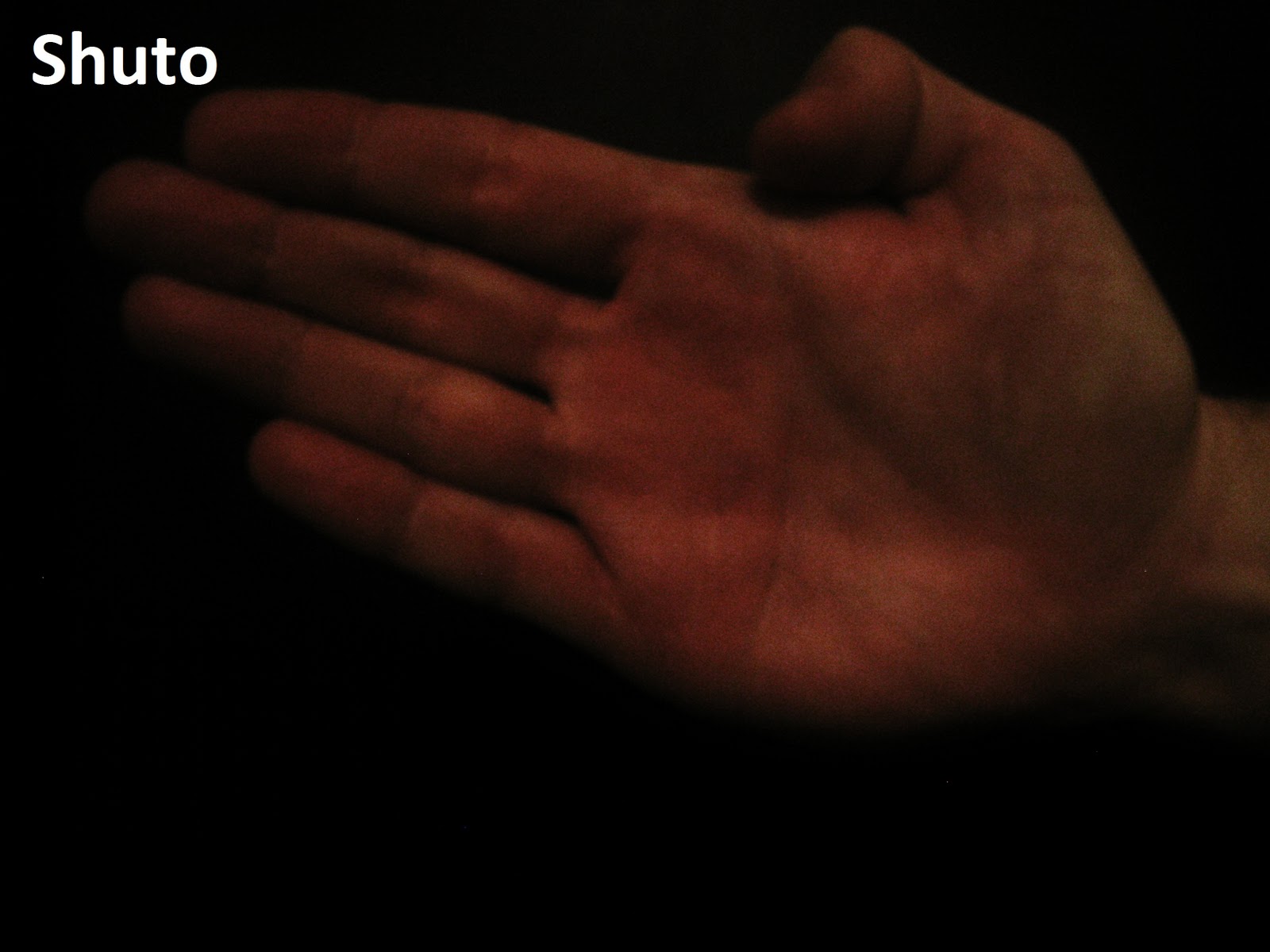
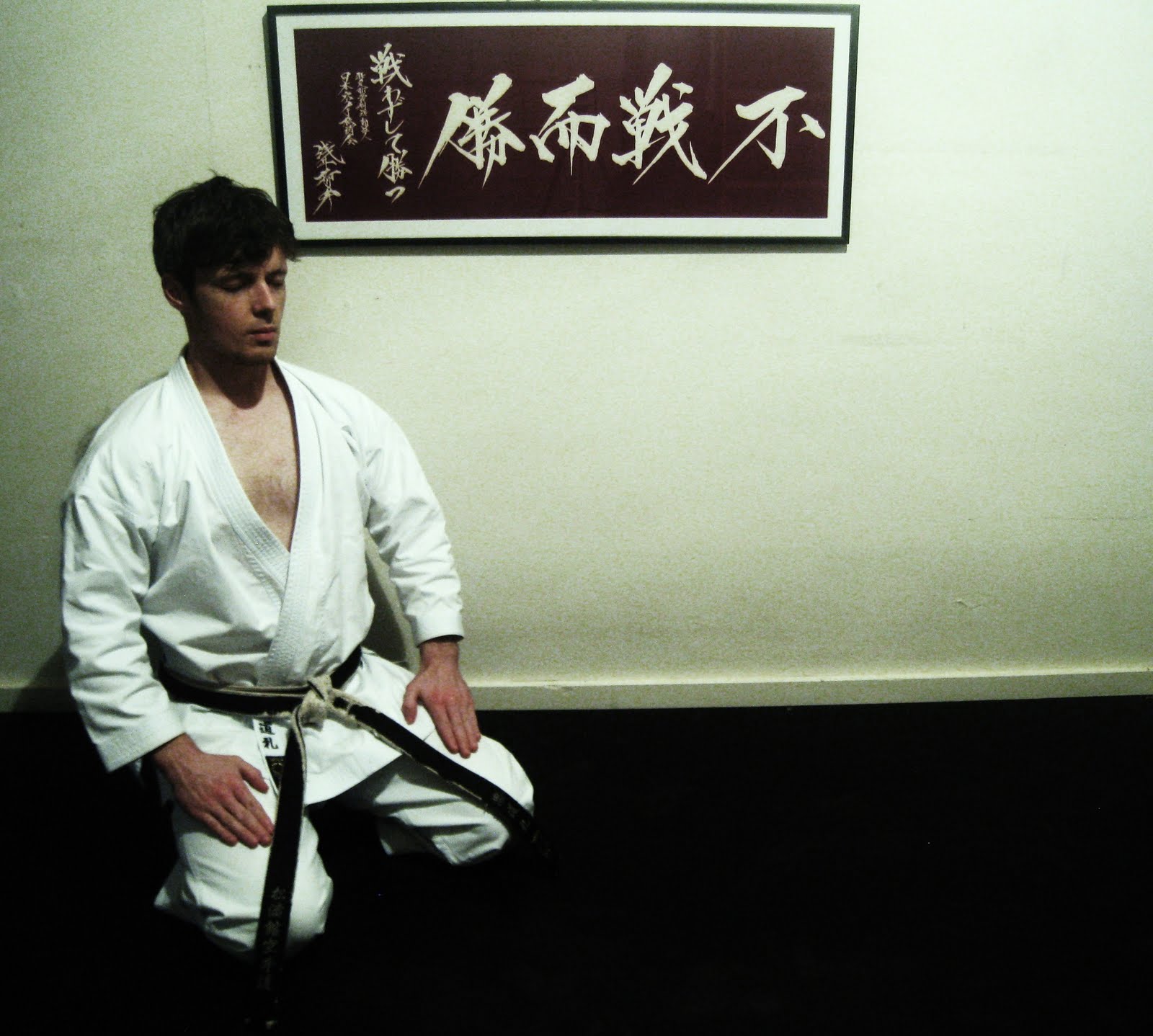
The vast array of karada no buki (weapons of the body) make karate-do extremely unique as an unarmed system of self-defence. Here is a list of the most common, as taught in Asai-ha Shotokan-ryu. I failed to include the head, hips and teeth as weapons, but these are also standard.
Please note: In some of the photos I have intentionally positioned the karada no buki to more clearly show how to correctly form them (as opposed to showing it in the typical manner for actual application).Osu, André.
© André Bertel. New Zealand, 2010.


Saturday, 27 November 2010

Traditional Karate-Do Beach Training - Christchurch, New Zealand.

This morning a small group of karateka from the Christchurch Shotokan Karate Club did practice at North Beach from 6am. The training was initiated by a run and around 100 seiken choku-zuki and 50 mae-geri, followed by oi-zuki and mae-geri in standard ido-kihon form. We then went through the Heian and Junro kata, kihon ippon-kumite, jiyu-kumite, and some other calistenics including the traditional `beach sumo'. The session was rounded off by seiken-tate (fore fist knuckle push ups) and an extended time in mokuso. Well done to everyone who attended! Here are some photos from this mornings keiko courtesy of Mizuho. You can click on the photos to enlarge them. Well done everyone! Osu, André.
__________ 

© André Bertel. New Zealand, 2010.


Tuesday, 23 November 2010

Site Video Links Updated

Arriving home tonight from training, at the Christchurch Shotokan Karate Club, I found several emails requesting links to my previously uploaded videos. This occurred because early this afternoon I provided a link to a new video kindly uploaded by Silvio Cannizzo from Mira, Italy (please click here to check it out: http://www.youtube.com/watch?v=7CBEtiICjBw).

Below are the previously uploaded links to videos. Please feel free to comment and rate the videos. My objective is to talk with my karate and to keep Asai Sensei's karate alive in the purest technical form. The direct links below are all from 201o, and the following link including my karate with my late teacher Tetsuhiko Asai, some compeition clips and a sample of Asai-ha Shotokan-ryu kata.
__________

These samples of karate give a general indication of the karate tuition available at the Christchurch Shotokan Karate Club & Tetsubukan. For people interested in attending practice, please feel free to email me at: andre.mizuho@hotmail.co.jp
__________

PREVIOUS VIDEO LINKS


Self-training in the mountains (Oita, Japan): http://www.youtube.com/user/andrebertel?feature=mhum#p/u/3/-sCwEte1Zsw

Teaching in Hamburg, Germany: http://www.youtube.com/watch?v=oBHfwT0n8I8

Teaching in Lignano Sabbiadoro in Italy: http://www.youtube.com/watch?v=hjWjasrt2qw

Teaching in Ahrensburg, Germany: http://www.youtube.com/watch?v=3LW-UgZECcY

Teaching in Shibuya, Tokyo: http://www.youtube.com/watch?v=aCz1f8ruhTM

For all video links prior to this (pre-2010) please click here and navigate/select clips accordingly from the following post: http://andrebertel.blogspot.com/2009/09/andre-bertels-karate-do-video-links.html

© André Bertel. New Zealand, 2010.

Monday, 22 November 2010

More video footage from Italy

Here is some footage kindly uploaded by Silvio Cannizzo Sensei from the seminars I taught in Italy earlier this year. This was the final practice on the last day of training in Mira, and shows the great karate spirit of Mauro Mion Shihan (7th Dan) and Guiseppe Formenton Shihan (7th Dan), and that of their students.
Best wishes to all of our wonderful karate friends in Italy, OSU! André & Mizuho.
© André Bertel. New Zealand, 2010.
________
PS - Here is a link to a previous article relating to the seminars in Italia. Click here: http://andrebertel.blogspot.com/2010/05/video-footage-from-my-seminars-in-italy.html

Friday, 19 November 2010

Sinking the tanden

My mind set in regards to stances, whether deep or shallow, is to sink my tanden into the ground. I also do this when ground fighting and when sitting in seiza for mokuso. Insignificant of what style or martial art one practices, this is a particularly useful approach as it works to maintain optimal balance, especially in a real confrontation (when facing a sudden and violent attack). This was a foundational aspect of Shotokan-ryu, but is often misunderstood.
______

Reality check: Many people find it difficult to deal with a violent blitz of punches being rained down on them. They get on the `back foot’ and their well-polished skills fall to pieces. It is of little wonder why these people really start questioning their style and training methods. Working in the security industry for years allowed me to see lots of martial artists find out that their skills were for the `dojo only'.
______
More advantages of sinking the tanden: Of course `sinking the tanden’ is also applicable when moving. Leading movement from the tanden is faster, “keeps your head back” and when perfected minimises `telegraphing’; not to mention it results in a smoother transfer of power into the target.
______
You may now be thinking "You forgot the physical benefits of low stances". Well, if you think this, you've missed the point. The depth of the stance is not the point of this article, as sinking the tanden is what really counts. And insofar as leg strengthening is concerned, there are far better ways to do this i.e. - squats, plyometrics etc. The benefits of a low stance are for application, but that is most certainly worth another article.
_______
Regardless of the stance, position of movement `sink your tanden’ and do everything from your centre. This is one of the skills that the Japanese consistently master and Westerners consistently do not, and is a key reason why Japanese karateka are perceived to `technically look different’.
© André Bertel. New Zealand, 2010.

Tuesday, 16 November 2010

Bag work

One piece of advice my late teacher Shuseki Shihan Tetsuhiko Asai stressed when I first met him at the JKA (Japan Karate Association) in the early 1990’s was to "regularly do impact training". Namely on the makiwara and sand bag. In this post I’d like to share five simple tips for training on the bag, which Asai Sensei always stressed, and I’ve found very useful in my practice.
_________

1. When striking the bag make sure you are hitting optimally with whatever karada no buki (weapons of the body) you are using, and with the correct angle, depth and trajectory relevant for the target/technique. Therefore, you must fully `understand’ anatomy in the martial arts sense.

2. Don’t `box’, use the wide variety of techniques that karate has, and use them with ichigeki-hissatsu in mind at all times. Seek a finishing blow with every action (do not dwindle your training into sports fighting). Rather, focus specifically for actual self-defence.

3. The heavy bag is where you can impact with full power and develop your body for this, therefore, when doing bag work always seek to maximise your penetration power and effectiveness. Perfect your use of speed and power, and eradicate any unnecessary use of energy.

4. Don’t stand toe to toe with the bag, move around and attack from all angles and distances, and with different timing (both rhythmical and broken).

5. Avoid losing your kihon. Kihon (fundamentals), kata (formal exercises) and kumite (fighting) are one. Therefore, regardless of the training tool (heavy bag, makiwara, etc…) keep your technique. Never change your techniques to suit the tool, rather take the hard road, and make your techniques work!
________

Another thing Asai Sensei used to say was “hit the bottom of the bag” as he was an avid believer in conditioning of the body. My advice in this regards is to build up slowly, regardless of whatever training you take on. This way you can avoid injuries and make the most of your karate practice.


© André Bertel. New Zealand, 2010.

Sunday, 14 November 2010

The criticality of self-practice

Self-practice is a critical element of karate training. Consider going to the dojo as attending university lectures, and self-practice as the study.
_______
Looking at things from this perspective and you can think of `the exam' as the situation where your knowledge is tested under pressure (for example in a self-defence scenario).
______
How many people can pass their exams by only attending the lectures and without study? Likewise, how can one expect to acquire truly reliable skills without self-practice?
______
Just some food for thought! All the very best, André.

© André Bertel. New Zealand, 2010.


Thursday, 11 November 2010

Links to previous articles

It has been a while since I've posted backdated links for my articles so I thought I'd do that today. Currently there are 267 articles, and with over 726,000 visitors from all corners of the world, I think it is reasonable to say that this blog is fairly popular. Sadly, as to be expected, especially given the nature of the karate world, this has stirred some pretty intense jealousy. Not to mention my passion for the maintenance of `reasonable technical standards'. Regardless, I will keep posting, and for those of you who've enjoy the articles, photos and videos I've presented thus far, I can assure you that there is much more to come! I'd like to thank everyone who has sent me letters, and apologise that it is impossible to answer everyone.

2008 ARTICLES: http://andrebertel.blogspot.com/search?updated-min=2008-01-01T00%3A00%3A00%2B09%3A00&updated-max=2009-01-01T00%3A00%3A00%2B09%3A00&max-results=50

2009 ARTICLES: http://andrebertel.blogspot.com/search?updated-min=2009-01-01T00%3A00%3A00%2B09%3A00&updated-max=2010-01-01T00%3A00%3A00%2B09%3A00&max-results=50

And 2010 ARTICLES thus far: http://andrebertel.blogspot.com/search?updated-min=2010-01-01T00%3A00%3A00%2B09%3A00&updated-max=2011-01-01T00%3A00%3A00%2B09%3A00&max-results=50

For videos please go to my youtube channel (click on the following link): http://www.youtube.com/user/andrebertel?feature=mhsn

All the very best, André.

© André Bertel. New Zealand, 2010.

Sunday, 24 October 2010

Training schedule updated

Kihon: (1) Chudan oi-zuki (fudo-dachi); (2) Jodan age-uke kara mawashi-geri, uraken yokomawashi uchi soshite chudan oi zuki; (3) Chudan soto-uke karate yori-ashi (kiba-dachi) yoko empi uchi, uraken yokomawashi uchi doji ni mae-ashi yoko-kekomi soshite chudan gyaku-zuki; (4) Chudan shuto-uke (kokutsu-dachi) kara mae-ashi mae-geri soshite shihon nukite; (5) Chudan uchi-uke kara jodan kizami-zuki soshite chudan gyaku-zuki; (6) Chudan mae-ashi mae-geri kara jodan mae geri; (7) Chudan mae-ashi mawashi-geri kara jodan mawashi-geri; (8) Ushiro-geri kara uraken yokomawashi uchi soshite gyaku-zuki; (9) Yoko-kekomi ashi o kaete yoko keage (kiba-dachi); (10) Jodan shuto yokomawashi uchi kara jodan shuto uchimawashi uchi.
_________

KEY POINTS: - (a) Transfer of body weight especially in regards to keriwaza with the lead leg. (b) Natural as opposed to extreme shomen and hanmi (Asai Sensei style - i.e 10% lead hip forward in shomen & around 45% for hanmi). And (c) Leg/foot coordination.
_________

Kata: (Kihon-gata) A variety of Heian, Junro, Tekki & Kibaken; (Sentei-gata) Jion; (Shotokan ryu jiyu-gata) Unsu; and (Asai ryu koten-gata) Yokotawaru-tatsu &
Kakuyoku-sandan.
_________
Kumite
Special focus on sen no sen via uchikomi training. Recently much training in class, and in my private lessons/trainings has been specifically for jiyu-kumite. The key focus in this practice has been correct maai for "optimal effect" in the traditional sense.
________

© André Bertel. New Zealand, 2010.