Thursday, 23 February 2023

水手 (Suishu performed slowly): Part 2 - Informal Video

 This video of Suishu Kata was informally and suddenly filmed on the spot by my (now eight-year-old) daughter, Mia. 

Notice I changed aspects of movements 46/47. This variation is also OK with the OYO (application) but at (for) a closer distance. No 'hidari koko jodan oi-zuki' (as I taught at the Freital, Germany seminar last week) but rather an enpi-uchi. Asai Sensei taught this variation to me, so both are OK depending on the maai. 

Overall, this version of Suishu is different from the version taught widely now, and is different from Asai Tetsuhiko Sensei's official video; however, this was how he practiced and taught it in private. Therefore, it must be preserved

Suishu's training of transitions, fluidity, adaptability, and, of course, natural energy offers us many useful lessons to advance 'standard Shotokan'. My kindest regards and best wishes from Oita City, Kyushu, Japan. OSU, - AB.

© André Bertel. Oita City, Japan (2023).

Monday, 20 February 2023

水手 (Suishu): Part 1 - Brief Written Summary

This post is for the attendees of my recent seminars in Freital, Germany, on February 4th and 5th, 2023. It outlines the unique version of 水手 ’Suishu’ (Water hands) Kata, which I was personally taught. My hope is that these notes will help all of you to retain this kata; moreover, its relaxed use of energy/power, water like adaptability, and combat applicability that it transmits. Greetings and best wishes from my dojo here in Oita City, Kyushu, Japan. — 押忍!


水手

Suishu (Mizu no te)


Asai Tetsuhiko Sensei also called this kata 水の手  (ミズノテ ) or ‘Mizunote‘. His official description is as follows: “This bujutsu kata incorporates movements of water into taijutsu. A jutsu for mastering the concept of water, which is expressed in ‘the change of speed and strength’ in the various waza (sometimes intense, sometimes gentle) . Accordingly, Suishu mimics the flow of water. It is one of five ‘natural energy’ kata, which function to perfect fluidity, adaptability, and the optimal use of power to transcend muscular strength”. — Andre Bertel.


[58 movements with kiai applied on the actions 27 and 58]


Kata overview:


Rei: (Musubi-dachi).


Yoi: Ryoken daitai mae (Shizentai).


1. Step back diagonally rightward into migi ashi mae fudo-dachi with sasho jodan sotonagashi-uke following into migi te osae-uke. Asai Sensei also taught this as Hidari kokutsu-dachi; however, that for higher grades, the less distribution of weight to the rear leg is more effective. Thus, Fudo dachi should be used by higher grades in this action.


2. Change into migi zenkutsu with migi gedan uke-zuki.


3. Hidari chudan oi-zuki.


4. Draw in the right foot and face diagonally to the right in heiko dachi with migi haishu/haiwan uchinagashi-uke


5. Move back diagonally into hidari ashi mae fudo-dachi with usho jodan sotonagashi-uke flowing into hidari te osae-uke.


6/7. Repeat steps two and three on the opposite side.


8. Execute hidari jodan uchi-uke diagonally to the left.


9. Step diagonally on the line of the previous uke into hidari zenkutsu-dachi with hidari uraken jodan tatemawashi uchi.


10. Hidari ashi soto-uke and at the same time make hidari jodan soto-uke.


11. Migi chudan gyaku-zuki (hidari zenkutsu-dachi).


12-15. Repeat movements 8–11 on the opposite side.


16. From where you are deliver hidari jodan uchi-uke.


17. Pivoting into hidari zenkutsu make migi jodan uchi-uke.


18. Advance on the centerline into migi zenkutsu-dachi with hidari chudan gyaku-zuki.


19. Turn 90 degrees leftward into hidari ashi mae nekoashi-dachi with hidari jodan soto-uke flowing into sasho gedan-barai and a simultaneous usho hitai-gamae, then counterattack with migi shuto jodan sotomawashi uchi (saken hidari koshi). Complete this action, by expanding from hidari ashi nekoashi-dachi into hidari zenkutsu-dachi; thereby, utilizing the transfer of weight into zenkutsu-dachi to make your impact with your 'shuto' both relaxed and heavy.


20. Turn 180 degrees and repeat movement 19 on the opposite side.


21. Pivot into hidari ashi mae hiza-kutsu with migi shuto sokumen harai-uke.


22. Okuriashi by drawing the left foot half way to the right with migi shuto jodan age-uke/kamae.


23. Advance into hidari zenkutsu-dachi with hidari chudan mae enpi-uchi.


24. Migi teisho chudan gyaku-zuki.


25. Turn 180 degrees into migi ashi mae neko ashi dachi with migi shuto gedan-barai.


26. Migi kizami mae-geri.


27. Without returning to neko ashi advance directly into migi zenkutsu-dachi with hidari chudan gyaku-zuki (KIAI).


28. Yori-ashi rearward and slightly leftward into hidari ashi mae neko ashi, turning to face the left side, with hidari shuto gedan sotomawashi uchi/uke.


29. Hidari chudan kizami mae-geri.


30–31. Repeat movements 28-29 on the opposite side.


32. Kosa-aiyumibashi to the left simultaneously loading both shuto diagonally rearward at the right lower waist.


33. Move into hidari ashi mae fudo-dachi with a slow hidari shuto jodan uchimawashi uchi doji ni usho sokumen hitai gamae.


34. Kaiten shinagara migi jodan shuto uchimawashi uchi in kiba-dachi.


35. Turn leftward into hidari ashi mae neko ashi dachi and make ryo sho jodan age-uke.


36. Move into hidari zenkutsu-dachi with shuto hasami-uchi.


37. Step forward into migi zenkutsu-dachi with ryo ken gedan uke-zuki flowing into tateken chudan morote-zuki.


38. Turn clockwise to face ura shomen in kiba-dachi with migi tekubi jodan kake-uke diagonally to the right.


39. Transfer into migi zenkutsu-dachi with hidari chudan gyaku-zuki.


40. Migi teisho jodan age-zuki. A stationary and subtle switch into migi ashi mae fudo-dachi is utilized here. Asai Sensei also taught a return to kiba-dachi.


41-43. Repeat movements 38-40 on the opposite side.


44. Step forward with the right foot into migi zenkutsu-dachi. When doing this defend with hidari hidari te sotonagashi uke flowing into migi haishu jodan age uke. Note — the wind up for migi haishu jodan age uke is from behind your back whilst making the hidari te sotonagashi uke. In actuality this is a Kamae for striking the eyes and, when used in defense, is applied as kamae then usho osae uke.


45. From this position make a migi enpi-uchi (keep the hand of the striking arm open with the shuto formation).


46. Step forward into hidari zenkutsu-dachi with a pressing/pushing migi shuto jodan uchimawashi uchi. Asai Sensei emphasized t me that this is a press, opening the neck and off balancing, to attack with the next two waza.


47. Hidari koko jodan oi-zuki.


48. Migi koko jodan gyaku zuki. Movements 47 and 48 are ren-zuki both impacting with the ‘tiger mouth’.


49. Turn 270 degrees into migi ashi mae neko ashi dachi with migi shuto jodan tatemawashi uchi


50. Migi uraken jodan tatemawashi uchi moving into migi zenkutsu-dachi. Note, this is done with a large

scale rolling action like a wave coming on to a beach.


51. Hidari chudan oi-zuki. Asai Sensei stresses that movements 50 and 51 (and 53/54) are continuous.


52-54. Turn 180 degrees and repeat movements 47-49 on the opposite side.


55. Stepping 90 degrees to the right into Kiba-dachi make a big clockwise circle with the arms (ryo sho jodan-uke) that immediately flows into a large circular migi shuto jodan sokumen uchimawashi uchi. Note, hidari shuto suigetsu kamae is utilized here.


56. Kaiten shinagara counterclockwise into kiba-dachi with hidari yoko enpi-uchi. Note, the striking elbows hand is in the shuto formation.


56. Mawari nagara sagatte with both shuto raised up high—then slowly make ryo sho gedan te osaeuke—whilst simultaneously moving into migi ashi mae neko ashi dachi.


 58. Drive forward into migi zenkutsu-dachi with ryo sho shuto jodan uchikomi (KIAI). Asai Sensei taught me that this waza is to impact with boshiken on both sides of the carotid artery. 


Naore: Ryoken daitai mae (Shizentai).


Rei: (Musubi-dachi).


© André Bertel. Oita City, Japan (2023).

Sunday, 19 February 2023

Freital, Germany Seminar: February 2023 (PART 4) - Bonus Footage


© André Bertel. Oita City, Japan (2023).

Thursday, 16 February 2023

Freital, Germany Seminar: February 2023 (PART 2)

                                    RIP ASAI SENSEI

© André Bertel. Oita City, Japan (2023).

Sunday, 12 February 2023

Freital, Germany Seminar: February 2023 (PART 1)

© André Bertel. Oita City, Japan (2023).

Wednesday, 18 January 2023

水手 from Asai Tetsuhiko Sensei

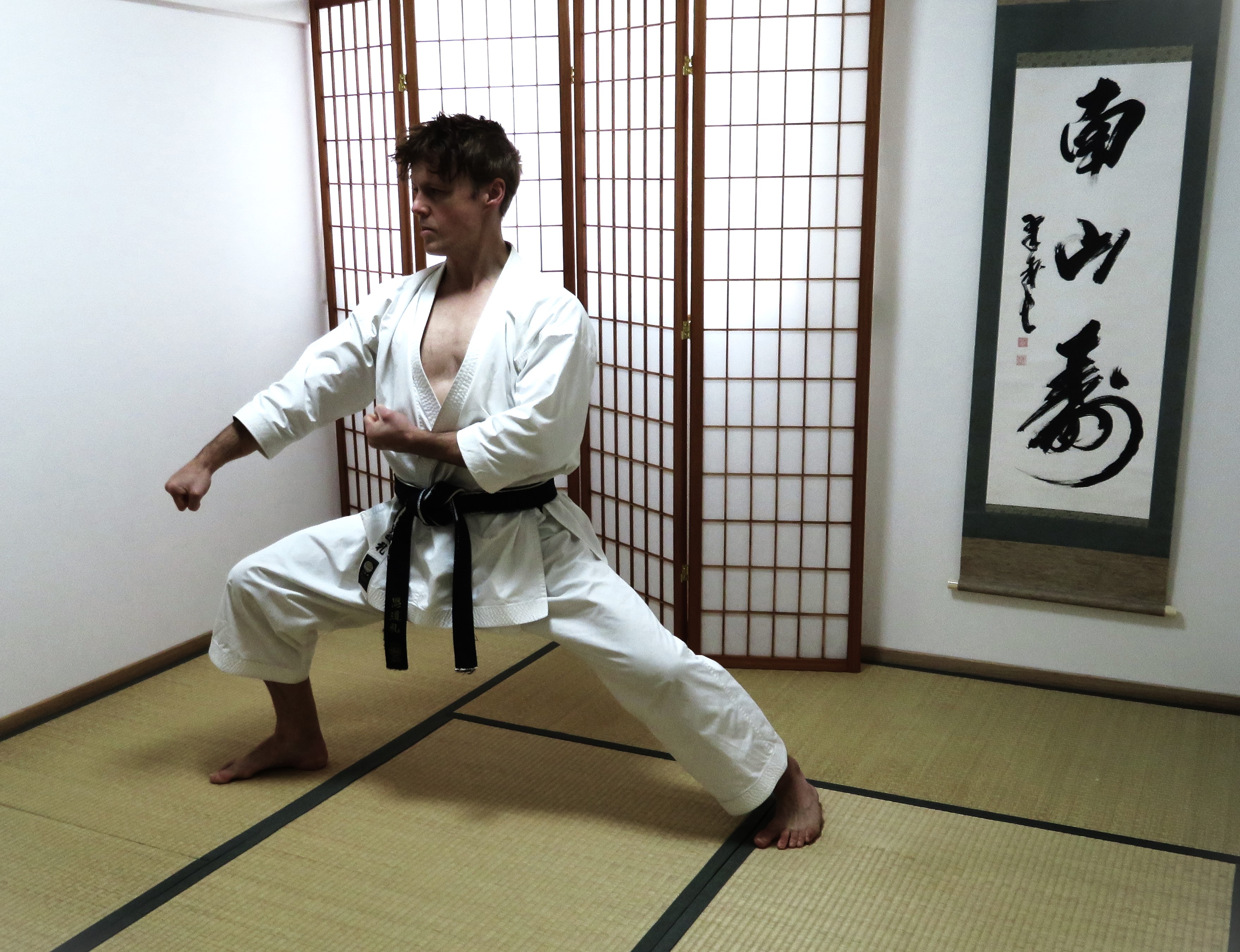
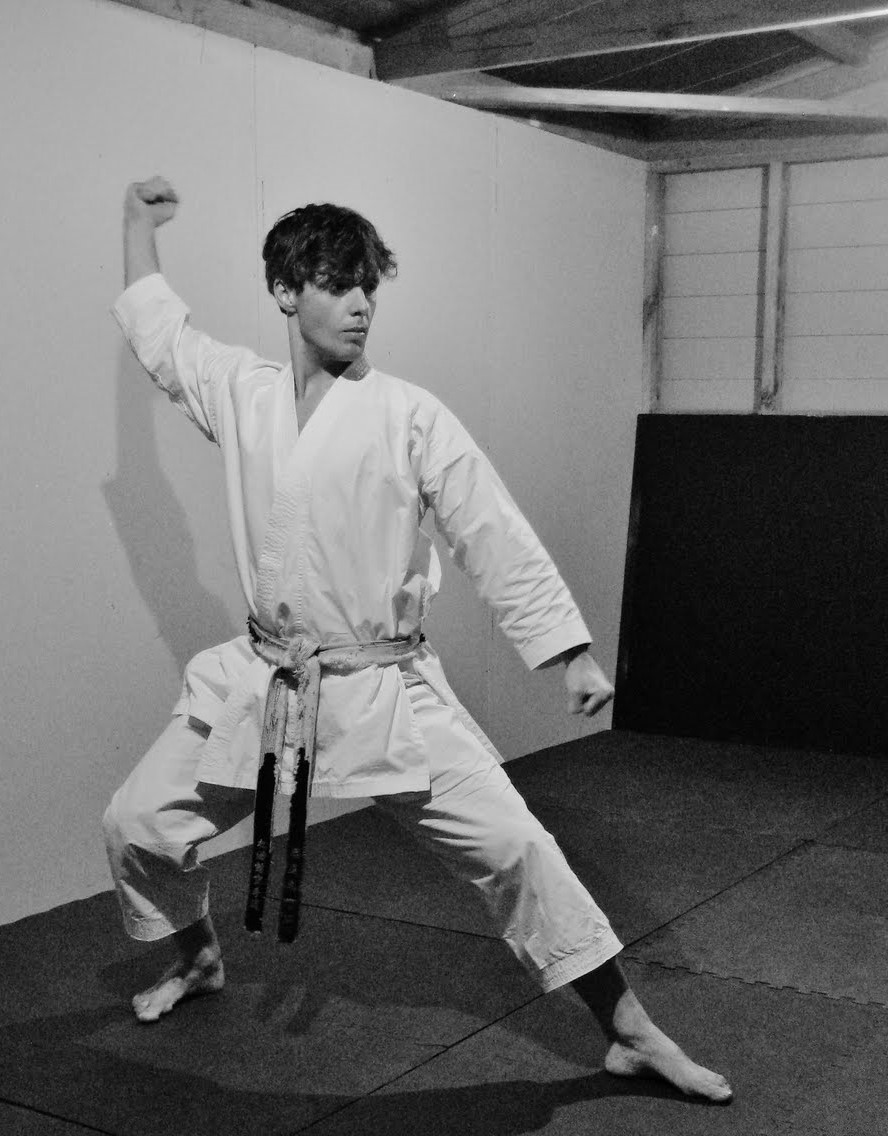
 My final self-practice today in the dojo was dedicated to SUISHU (Mizu no te). Below are some images from the session. There was also a video filmed within the training. 

I thought to quote Asai Tetsuhiko on Suishu Kata. I will do so in Japanese first, then in translate into English:

" 水手。この型は、時には静まり返った水面のごとく、時には荒れ狂う水流のごとく、生と動の攻防の技を織り成した、型である。"

"Water hands.  This kata is a formal exercise that interweaves the offensive and defensive techniques of life and movement, sometimes like a calm water surface and sometimes like a raging current". (Please note - I have emphasized some points in the translation to provide clarity from Japanese, which actually isn't clear without doing so).


To conclude, the Suishu that I have inherited, like many of the other kata from Asai Sensei, is different. Incorporating the flow of water into taijutsu was the prime training purpose of this kata; moreover, this is not form but effectiveness as 'bujutsu'. The current mainstream form of Suishu has lost this point and, in doing so, has become nothing more than 'another kata' (set of moves for performance) which is, of course, pointless and so very sad.


We must work hard together to preserve Asai Sensei's teachings, that of the old JKA, and also the origins of Shotokan.


© André Bertel. Oita City, Japan (2023).

Wednesday, 11 January 2023

An insight into Asai Sensei's Kata

 Today after my daily run I did some additional kata practice. I want to use this to highlight some key points about Asai Sensei's Kata (the so-called 'Koten-gata').

Before that, I'll clarify my practice. The kata I did today was SUISHU (Mizu no te), which has a special place for me. Asai Tetsuhiko Sensei made me do this (in addition to two other Koten-gata, and two standard Shotokan formal exercises) at my godan examination.


Suishu is not a kata for my body, it's really ideal for more lanky physiques; nevertheless, it is great for fluidity, continuity and, (like the other kata in its series), the use of natural energy: especially pertaining to muscular tension, contraction and stretching/expansion of the limbs.

I will not expand on this, except to highlight the first image in this post. Some will notice my use of fudo-dachi, which is more commonly practiced as kokutsu-dachi in the two osae-uke in the opening sequences of Suishu. I'm sure some will say that this is 'wrong'. So, I'll pre-emptively answer this incorrect assumption.


While IKS remains set on the standard 26 Shotokan Kata, the additional Kata (handed down from Asai Sensei) have some special variations directly from him, which Sensei was doing in his self-training. These were his refinements, and these are the versions I personally practice and teach.


To conclude, yes, we follow the standardized Shotokan Kata -- as standardized by the JKA -- in Nakayama Masatoshi Sensei's 'Best Karate' publications (pre-split era). However, we also train the earlier versions of kata from Funakoshi Gichin Sensei and investigate these accordingly. Likewise, we do the same with the Koten-gata. In saying that, I personally want to retain Asai Sensei's most refined versions of his karate, so that is my focus in these regards. I think that the retention of Shotokan, irrespective of master is very important. Otherwise, knowledge is simply lost forever. 

© André Bertel. Oita City, Japan (2023).

Tuesday, 10 January 2023

Any action without KIME is not true karate... But what really is KIME?

 Nakayama Masatoshi Sensei famously emphasized that “...irrespective of how much something resembles karate, anything action without kime is not true karate”. 


Today I’d like to talk about this statement from my personal experience and, in doing so, hopefully contribute towards people’s understanding.


To begin with I need to point out that while I’ve spent well over a decade training here in Japan, I never trained with nor met Master Nakayama. Actually, when I first came here in 1993, it was just over six years after he had passed away. Furthermore, I never had the opportunity to attend any of his classes outside Japan.


With this in mind, I need the clarify that most of the information I know about Nakayama Sensei is from his publications. Asai Tetsuhiko Sensei, Osaka Yoshiharu Sensei et al., (and other prominent personal students) have told me about him, but only minimal things and mostly not technical. In actual fact, I learned the most about him from Nakamura Masamitsu Sensei, but again, primarily personal stories outside of the dojo.


So, it’s fair to say that the publications have been the most informative source for me, about Nakayama Sensei’s actual karate technique.


That brings me to his statement about kime.


What does it mean? Well, clearly it means everything! Literally, anything without kime is not karate...


But what is kime?


Indeed, I’ve written a lot about this in the past but I still find that many people still fail to understand kime in karate.


Yes, kime means to be ‘decisive’ (kimeru, to make a decision/to decide) but, again, what exactly does that mean?


Is it only in waza which abruptly stops/concludes on one point in space or on/through a target? Then, and if so, can it also be in say, continuous flowing movements? Can it be anything which is ‘decisive’? Or must it be specifically defined?


The answer in karate is a combination of both intent and the sufficient ability required for that intent to fulfill the technical objectives of the art. Therefore, precise actions and effectiveness cannot be independent of each other. Accordingly, yes, pinpoint precise waza and flowing waza potentially have kime; however, abundantly lacking in either of the two aforementioned criteria determine that kime is not there or insufficient.


One may believe that ‘capacity’ is not important, however, in budo that is like having a gun without real bullets in the chamber. Even if you can rapidly draw the weapon and have precise targeting, that means very little if the ammunition is made of Styrofoam.


Consequently, a seemingly good performance of karate may be seen as having kime but, in actuality, if the individual is unable to apply the waza effectively in freestyle, it does not have kime. 


What’s so sad is that ‘performance karate’ coupled with ‘car salesman kuchi-bushi’ skills is extremely commonplace now. What’s even more sad is that so many people are unable to perceive this, and believe it to be ‘real’ and ‘good karate’. This is because, irrespective of organization and grade, they themselves do not understand what kime is (nor seemingly wish to). Thus, everything is based on ‘sound' (talk) and 'vision' ('movement' performance) which, needless to say, is pathetic in any form of ‘so called budo’. 


Never forget that kihon, kata and kumite are inseparable, they are a trinity which are held together by this correct understanding of kime, without which, as Nakayama Sensei said “...is not true karate”.


This is why all the greats excel in both kata and kumite. Why? Because kime technically permeates everything they do: and kime means that “kihon, kata and kumite are truly one”. To conclude, whilst I never met Master Nakayama, this is what he meant about kime in karate.

 押忍!

© André Bertel. Oita City, Japan (2023).

Sunday, 1 January 2023

Kata training is outdated...


Some people with very narrow perspectives dismiss the training and practice of kata. These people claim that in the 21st century “kata is outdated in various fighting arts”.


What they fail to recognize is that, in the bigger scheme of things, ‘martial arts without tools have been outdated for thousands of years’. Tools meaning 'forged weapons'.


That is, everyone in every culture across the world has fore-mostly focused on creating ‘ever more effective weapons’ and increasing skill in their usage (techniques, tactics etc). This ranges from clubs, blades, bows and projectiles, to the latest high-tech-weaponry in modern warfare. And, indeed this process continues and will keep continuing as long as humanity exists.


With these points in mind, it is clear that all ‘unarmed fighting techniques’ have been developed: (a) for when one is unarmed (obviously); (b) lost their weapon(s); (c) their weapon(s) is/are no longer useable or significantly nullified; (d) less lethality is the objective; or—in the case of contemporary karate—(e) the aim is “...self-defense for the average civilian in their daily life, as opposed to battlefield combat”.


From the last of these points, we can see what shaped Funakoshi Gichin Sensei’s karate, post-World War Two; and hence, even (for the most part) the removal weapons training in the Shotokan ‘style’. 


In addition to the aim of making Shotokan optimal for self-defense—for the average citizen—Funakoshi Sensei also saw karate as a means to strengthen the body, mind and spirit. The catalyst, at the heart of this, was/is ‘the art of karate’, which can be best attributed to the various kata. That is, kata not only 'preserves the traditional art of karate' but also 'evolves the karateka into an artist', which transcends mere unarmed combat.


Certainly, Master Funakoshi could have easily formulated a system of training excluding the kata (solo kata practice) and focused 100% on their respective oyo. However, unlike the narrow-minded people I referred to, in my opening statement, he saw karate from a bigger perspective. This bigger perspective gave kata not only its historical/preservation value, but also it’s incredible holistic strengthening capacity and simultaneous ability to make karate accessible irrespective of age; that is, lifetime budo—‘an art form’.


This means that when one is ‘past their prime’ they can still greatly benefit from training. Also, it means that one can practice the more brutal techniques in a solo form without harming others or being injured, which is imperative as the body ages (and recovery becomes a major issue). Needless to say, iriguchiwaza such as the ‘fish hooking’ in 雲手 (Unsu), 五十四歩大 (Gojushihodai), and other such classical kata applications, simply cannot be properly practiced on others, and certainly not with full speed and power; thus, on a pragmatic level, “...solo kata practice remains extremely valuable in the overall scheme of karate training”. So, here, we see safety from two perspectives.


From this realistic perspective, regardless of age and condition, kata practice provides rudimentary skills for self-protection; furthermore, physical training to build one up from where they currently are at any given stage in their life.


So no, solely practicing kata won’t prepare one for ten rounds of boxing, a cage fight, or a kickboxing match; however, when trained properly, it will enhance one’s ability in self-defense: and motivate training for a lifetime. 

Whilst the careers of competitive fighters are short lived, karateka—through the vehicle of kata (if practiced as bujutsu)—can keep developing their self-defense skills well into old age; moreover, enjoy a beautiful (budo) art, which has so many other life-long benefits.


I’d like to conclude by saying that I deeply respect all fighting arts and styles. That being said, I have very little respect for those with narrow perspectives about training/practice and application, that includes those in Shotokan.


In sum, there is no superior style or art, only what is optimal for each individual and their personal objectives. Furthermore, the capacity and efforts of each individual. Yes, please excuse the cliché: “it’s not the style but the person”. With this universal and productive perspective, time is not wasted ‘style bashing’ and, most importantly, one’s training time can be optimized! In my case, I’m not training to have a duel with anyone, compete in combat sports, nor am I preparing for the battlefield. My karate, application-wise, is purely for self-defense against an unprovoked attack as I go about my daily life. With these points in mind, KATA IS TIME VERY WELL WORTH SPENT! 

A very happy new year to everyone. AKEMASHITE OMEDETOU GOZAIMASU!

押忍!

 © André Bertel. Oita City, Japan (2023).