Saturday, 1 October 2022

Positive energy from Japan

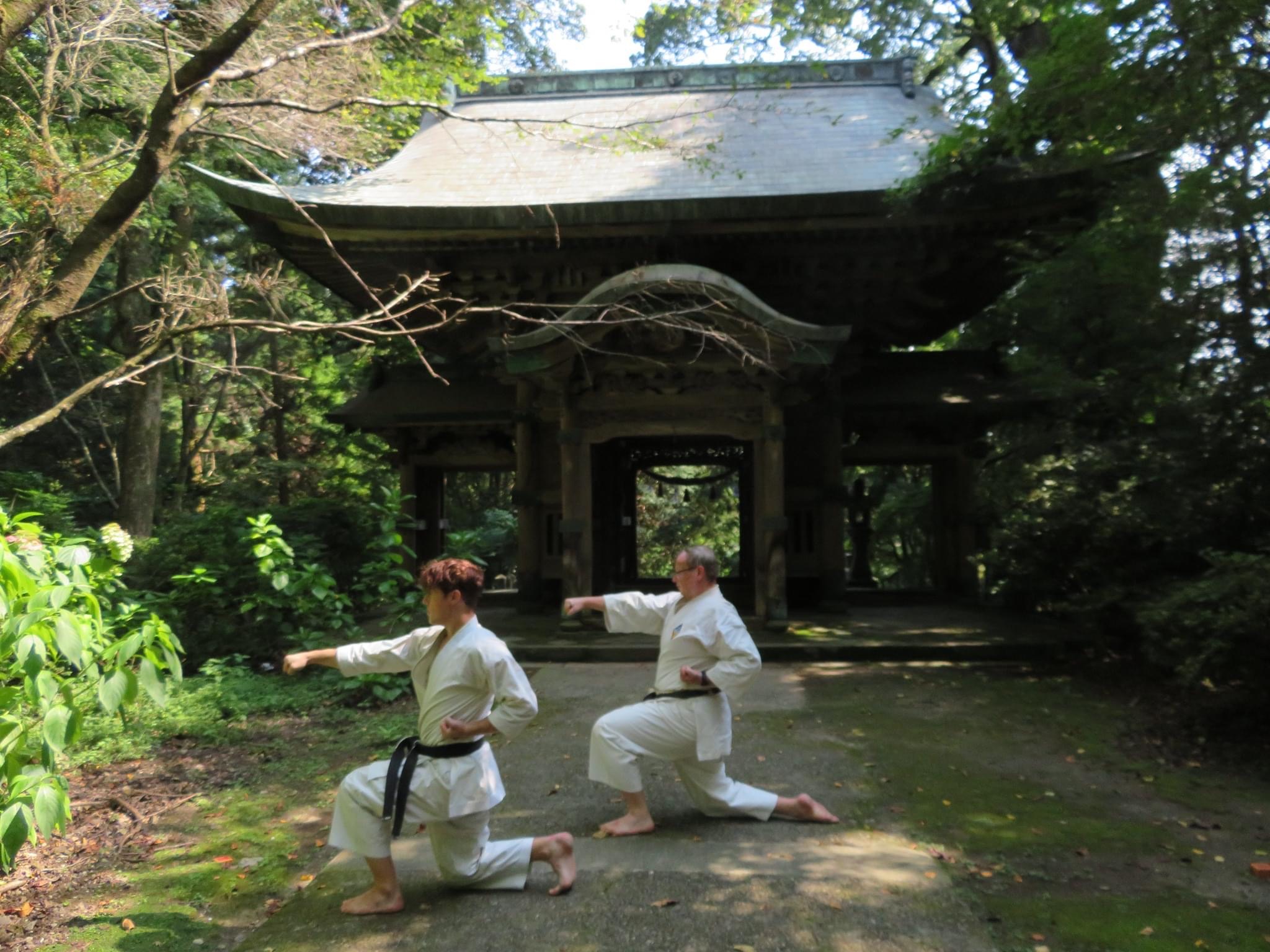
Today begins a new month and, therefore, a 'calendar-based chance' to renew training, set new goals, and drive forward. Accordingly, I thought I'd simply quote the NIJUKUN today. Positive energy form Japan, Osu, André Bertel.   

一、心は放たん事を要す 

HITOSU, KOKORO WA HANATAN KOTO O YOSU


© Andre Bertel. Oita City, Japan (2022).

Wednesday, 21 September 2022

Updated training regime

I won’t provide sets and repetitions of my current regime presented here, as in this current routine, I’m tending to ‘decide on the day’ based on my condition. Hoping that everyone is well, and I wish you all the very best in your training. Osu, — AB.


基本 (KIHON)

 1. Drive forward from heiko-dachi into hidari zenkutsu-dachi with saken jodan-zuki kara followed immediately by chudan-zuki then return to heiko-dachi. Next drive forward again, into hidari zenkutsu-dachi, with uken jodan-zuki then immensely return to heiko-dachi again. Without hesitation maximize juryoku (gravity) by advancing into migi zenkutsu-dachi with saken jodan-zuki. Following these four tsukiwaza return to heiko-zuki and mirror the practice on the opposite side. Initially practice two waza per count as niren-zuki then move on to all four tsukiwaza in one count.


Concentration on moving the center and gravity, fluid and relaxed arms, and ‘throwing out a heavy fist’. In sum, this renwaza is ‘kizami-zuki/gyaku-zuki’ and ‘gyaku-zuki/gyaku-zuki. Be sure to do this in a freestyle manner; that is, keep the arms loose, use the waist and legs fully, and engage your calves and gain maximum hip extension by rolling over the rear foot (with the heel raised and ball of foot planted). 


2. The following four renzokuwaza are ‘legs followed by hands’. Besides correct technical form, trajectory and use of power, the key point from jiyu-dachi is to ‘attack with the sasae-ashi with both keri and tsukiwaza; that is ‘large scale tai no shinshuku’ twice. In sum, the snap of the kicking leg is not enough: ground power must be utilized. Likewise, koshi no kaiten is not enough for each gyaku-zuki. The expansion/stretch of the rear leg must underpin the rotation and seiken must impact just before the completion of the stance. After the completion of the tsuki, zenkutsu-dachi must be contracted by drawing up the rear leg and simultaneously returning to the freestyle kamae. Make sure the this is done with te-ashi-onaji (hands and feet simultaneously concluding together, and that it is done naturally and relaxed. Movements one and two of Heian Yondan provide a reference in this regard.


-  Jiyu-dachi: Chudan mae-geri keage kara chudan oi-zuki (zenkutsu-dachi).

 -  Jiyu-dachi: Chudan yoko-geri kekomi kara chudan gyaku-zuki (zenkutsu-dachi).

 -  Jiyu-dachi: Mawashi-geri kara chudan gyaku-zuki (zenkutsu-dachi).

 -  Jiyu-dachi: Ushiro-geri kekomi kara chudan gyaku-zuki (zenkutsu-dachi).


3. From heiko-dachi advance with migi mae-enpi into migi zenkutsu-dachi, return to heiko-dachi and repeat on the opposite side. From here step sideward into kiba-dachi with migi yoko-enpi return to heiko-dachi and repeat on the opposite side. Step rearward with migi tate-enpi return to heiko-dachi and repeat on the opposite side. On the spot rotate into a wide kosa-dachi with migi kaiten-enpi return to heiko-dachi and repeat on the opposite side.


In all cases the body must be soft and, in particular, ‘shoulder snap’ must be utilized. With the exception of the kaiten uraken, shime must be used to optimize a strict hikite. When doing the kaiten uraken, the non-striking arm rests on the abdomen, as 'Zenwan mune mae suihei kamae' (like movements 2 and 6 of Tekki Nidan Kata) with the palm of the fist facing downwards. Note that when utilizing tenshin—into the wide kosa-dachi—one must not only spin but descend into the stance; thus, compress and stabilize. If you are observant, you will notice the use of the classical kakato-chushin here mixed with the freestyle 'tsumasaki methodolody'. Of course, the foundational method is the most important, but without freestyle it is incomplete.   


 4. Idokihon: Closed fist ukewaza followed by seiken gyaku-zuki

-  Zenkutsu-dachi: Jodan age-uke kara chudan gyaku-zuki.

-   Zenkutsu-dachi: Chudan soto-uke kara chudan gyaku-zuki.

-   Zenkutsu-dachi: Chudan uchi-uke kara chudan gyaku-zuki.

-   Zenkutsu-dachi: Gedan-barai kara chudan gyaku-zuki.


Focus on koshi no kaiten in zenkutsu-dachi: rotation/opening the hips into hanmi for each ukewaza utilizing the rear axis; and counterrotation into shomen for each gyaku-zuki using the axis of the lead leg. Practice both advancing and retreating with fumidashi making sure that both uke and tsuki have kime. Undetectably inhale on the uke and exhale on the tsuki.

The ‘karada no buki’ (weapon of the body) in closed fist ukewaza are the wrists; therefore, ‘send your power from the ground to them’ as you snap the shoulders/arms. Also pay special attention to the hikite on both waza. Lastly, maximize the classical kakato-chushin and make sure that rear foot ‘sokuto’ is firmly on the floor—especially when rotating into shomen.


I personally practice both the classic hanmi, around 45 degrees; but also, the large scale hanmi of 90 degrees, which I picked up from Robert Sidoli Sensei a few years back. In either case, I always concentrate on making perfect shisei (posture) throughout my transitions.


5. Idokihon: Kokutsu-dachi, Shuto-uke

Advancing and retreating in kokutsu-dachi with shuto chudan-uke and other waza; furthermore, transitions into zenkutsu-dachi with chudan tateshihon-nukite.


-  Kokutsu-dachi: Shuto chudan-uke.

-  Kokutsu-dachi: Shuto chudan-uke kara nukite (zenkutsu-dachi)

-  Kokutsu-dachi: Shuto chudan-uke kara kizami mae-geri soshite nukite (zenkutsu-dachi).

-  Kokutsu-dachi: Shuto chudan-uke kara kizami mawashi-geri soshite nukite (zenkutsu-dachi).


Emphasis on the conscientious weight distribution to the rear leg, and ‘control of the rear foot’ moving in kokutsu and transitioning in zenkutsu-dachi; also, kakato-chushin as to avoid ‘drifting the stance when making nukite. In addition to these points, the shisei of the pelvis, torso, neck and head, and both high and compact raising of the knee for both forms of kizami-geri. Lastly, that within fumidashi the hips do not rotate to completion until the end of the step; that is, shomen is maintained until the last moment. Noting Tanaka Sensei's classes, who is a specialist of the kizami-keriwaza, the spring of the ankles is of utmost importance.


五本組手 (GOHON KUMITE)

Attacks: (1) first set JODAN (Jodan oi-zuki); (2) second set CHUDAN (Chudan oi-zuki; (3) third set MAE-GERI (Chudan mae-geri keage); and (4) fourth set  JIYU (a freely chosen attack on each step)


Defense and Counterattacks: (1) Any jodan ukewaza with a free choice counter attack after the fifth and final defense; (2) Any chudan ukewaza with a free choice counter attack after the fifth and final defense; (3) any gedan ukewaza with a free choice counter attack after the fifth and final defense; and (4) fourth set, free choice ukewaza in reaction to all five random attacks with a free choice counterattack after the fifth and final defense.


The prime focus of when attacking is the seaming out of any superfluous actions; in particular, pertaining to unsoku. Also fully utilizing the hikite.

In the case of defense and counterattack, the focus point is ‘spontaneous best fit uke and hangekiwaza: especially in regards to maai and optimal effect.


型 (KATA)

 A.  General: I am currently working through all 65 official IKS (International Karate Shotokan) Kata, which something I do each year.

 B. Specific: 珍手 (Chinte) and 八門 (Hachimon).


© Andre Bertel. Oita City, Japan (2022).

Sunday, 18 September 2022

Super Typhoon 'Nanmadol'

A very large 'super typhoon' is coming to Oita City now, and it seems this one will hit with full force. I wish everyone safety. For obvious reasons I will not be at the dojo (for at least today and tomorrow).
Since I first came to Japan 29 years ago, I have never experienced such a big typhoon directly, and I've experienced many, so it really is a monster!

Again, I wish everyone stays safe and follows the directions of the local authorities!

Osu, AB

© André Bertel. Oita City, Japan (2022).


Monday, 12 September 2022

International Seminar Announcement: Germany - February 2023

Finally, I will be conducting the 2nd ‘INTERNATIONAL BUDO-KARATE SEMINAR’ in Freital, Germany, which is close to Dresden. This event will be held on February 4th and 5th, 2023.


Here's a link in English: http://www.andrebertel2023.shotokan-freital.de/#eng


My recommendation, for those wishing to attend, is to book your place early. That not only guarantees that you can attend but it also helps the organizers: Shotokan-Karateverein Freital e. V.


You can contact the head organizer Stephan Pilz Sensei by emailing him here: stephan.pilz@shotokan-freital.de 

I am looking forward to teaching this seminar very much. It will be an EXCEPTIONAL SHOTOKAN WORLD EVENT for all who attend. The last introductory seminar was informally titled ‘Start Over’, this international seminar's informal title is ‘MOVE FORWARD’.

 See you in Freital, Germany. Osu, André

© André Bertel. Oita City, Japan (2022).

Sunday, 11 September 2022

Renshusei: Thomas Heinlein Sensei


Thomas Heinlein Sensei (3rd Dan) from Sindelfingen, Germany, came for training between the eighth and eleventh of this month. In fact, this made him the first Renshusei from outside of Japan since the end of 2019. Accordingly, I’d like to congratulate him. 

Thomas was slightly delayed, due to the typhoon that hit Kyushu; however, it was only for the day and the schedule still worked out superbly. In sum, he completed four hours of private training, which covered 'the overall themes of Shotokan' as Budo/Bujutsu.

Specific kihon, all the forms of Kumite, and aspects of the Shotokan kata (including points from Bassai Dai, Enpi, Jion and Meikyo) were practiced and analyzed. Thomas Sensei also requested 順路初段 (Junro Shodan) and 順路二段 (Junro Nidan), which I taught in the original Asai Sensei method—along with the original applications. For Kihon, Kata and Kumite the focal point was optimal effectiveness, which is the essence of all the forms of Bujutsu.

Taken as a whole, he has plenty of things to share back in Germany and a lot of very useful ‘karate homework’. I must add here that away from karate, Thomas is a great guy and we also spent nice times socializing after the renshusei trainings. Again, and to conclude, I’d like to both congratulate Thomas, and wish him a very pleasant journey home to Deutschland.

 押忍! André

© André Bertel. Oita City, Japan (2022).

Wednesday, 7 September 2022

Seamlessly merging tradition with science

Sports Science, generally speaking, includes four main and very broad fields of study. These are: (1) Physiology; (2) Psychology; (3) Motor control/Learning; and (4) Biomechanics. Today I will begin by very briefly and simplistically outlining each of these, followed by their importance for not only sports and other activities, but equally for Budo/Bujutsu as well.
At 46 years old I deeply value sports science.

Physiology

The scientific study of how the human body works. It analyzes the chemistry and physics underpinning body functions. This ranges from how molecules behave in cells to how systems of organs work together.


Psychology

The scientific study of the mind and behavior. Psychology includes the analysis of both conscious and unconscious phenomena, including both feelings and thoughts.


Motor control/Learning

The scientific study of skill acquisition via the improvement of bodily control; namely, the processes of initiating, directing, and grading purposeful voluntary movements. 

Biomechanics

The scientific study of the structure, function and motion of the mechanical aspects of biological systems, at any level: from whole organisms to organs, cells and cell organelles, using the methods of mechanics.


So, in consideration of the four main fields of sports science, it is utterly clear that they are critical for the optimal application of karate. Why I am stating the obvious is “…to emphasize how the traditional art of karate can and should seamlessly merge with the latest scientific developments/understandings. In fact, it always has.


I should add to this list the oldest scientific discipline of medicine: Anatomy. Besides this knowledge relating to physiology, and so forth, it also pertains to 急所 (Kyusho)―vital points of the body. Also, and consequently, the weapons of the body and waza (including angles, depth, and types of impacts, chokes and locks/joint damaging techniques).


Following this 道 (Dou/Michi) the 'traditional waza' can and do become ever more effective, as well as 'the combative/self-defense mental state'. Furthermore, the actions of karate can also be performed in a safer way; in particular, in regards to ‘protecting the musculoskeletal system' when executing ballistic motions. These points were very important to Asai Tetsuhiko Sensei and, accordingly, also very important to me as an instructor and on-going 41-year student of Karate-Do.

 © André Bertel. Oita City, Japan (2022).

Monday, 5 September 2022

風手 (FUSHU) also known as 風の手 (Kaze no te)

秋 (Aki) - Fall/Autumn has truly arrived here in beautiful Oita City, Japan; furthermore, in the early hours of tomorrow morning, it will bring the so-called 'super typhoon' labelled 'Hinnamnor'.

Typhoon ''Hinnamnor' approaching Japan.


So far wind gusts have been recorded up to 185 mph (297 kilometers per hour). So, no, I won't be doing any 'rooftop Kiba-dachi' challenges this time.


In light of the incoming typhoon. I thought I'd briefly mention our kata  風手 (FUSHU), also known as 風の手 (Kaze no te). This kata is largely based on the winds of a typhoon. It is important to note that Asai Sensei's Hushu is probably only known within our group. With all due respect, the other version of this kata has no relationship, whatsoever, to Hushu/Kaze no te. Rather, it was completely created by the late Kato Sadashige Sensei.


Today I will quote Asai Tetsuhiko Sensei about Hushu verbatim here, then do my best to translate his words into English:   各方面から起こる自然界の風力及び嵐の荒れ狂う風圧を想意して体術に取り入れた風心術

"Fushin jutsu - which is put into the physical techniques imagined from the strong and crazy wind pressures of a storm/the wind power of nature, which occurs from every direction".


This kata was Asai Sensei's favorite in the series of the five 'Natural Energy kata'; namely, Unsu, Kashu, Suishu, Roshu and Hushu. Needless to say, the core components of these five kata are relaxation, softness, speed, snap and, again, moving naturally. Note, "...five kata with five mutually shared points".


For those of you here in Oita and Kyushu, please stay safe.

OSU, André

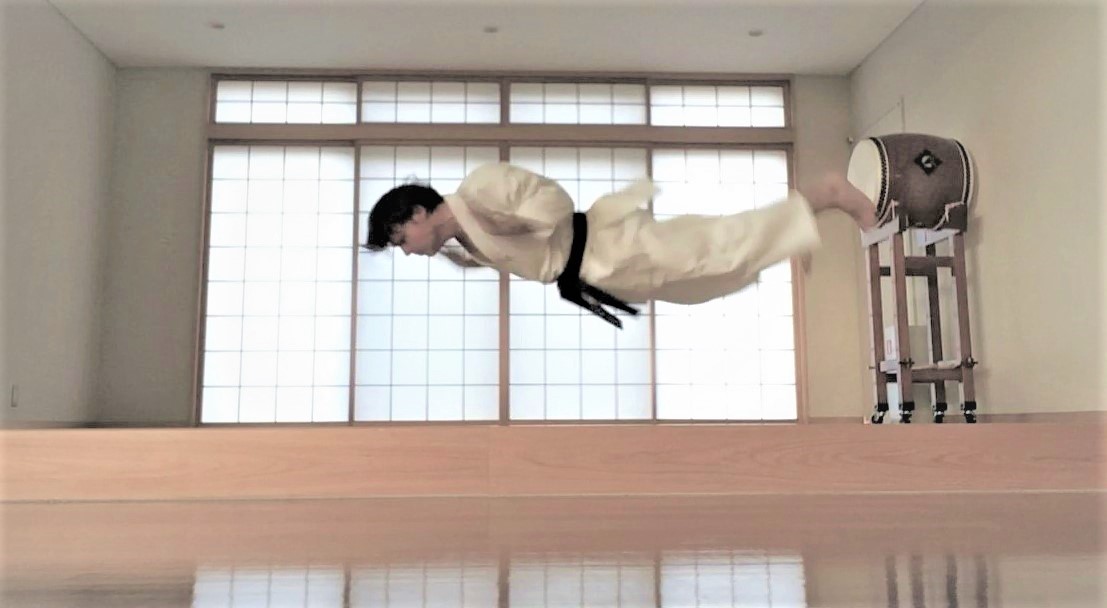
Hushu features the same jump as Unsu, which resembles the motion of a typhoon.

  © André Bertel. Oita City, Japan (2022).

Wednesday, 31 August 2022

TERRY

 This post is dedicated to my big brother Terry, who suddenly passed away this previous week.

                                    © Andre Bertel. Oita City, Japan (2022).

Tuesday, 23 August 2022

End of Summer 'Kihon Challenge Training'

 To wrap up the summer, here in Japan, I decided to really push myself. At 26 years old I lost an informal squat competition with Kagawa Masao Sensei who was 47. It was in the final quarter of 2002 after three months training in Japan (at that period, of my life, I was still always on visitor visas. So I could only stay for three months at a time). Anyway, to send me off Kagawa Sensei made the final session 50 minutes of squats 'to send me home with a memory.' Since then, I have regularly turned up the heat in my self-training, especially in regards to squats. Now I am nearly Kagawa Sensei's age back at that time, I'm 46, so I'm hoping to be able to outgun karateka in their 20s like he did with me. He showed me that we must push ourselves to the limit. A big thanks to Kagawa Sensei for his pressure and motivational pressure. Such experiences I will never forget. A great memory! OK, so I onto my SUMMER ' KIHON CHALLENGE TRAINING' regime. OSU!!


基本 (KIHON)

①         Migi chudan gyaku-zuki (Hidari zenkutsu-dachi): 1000x

②         Hidari chudan gyaku-zuki (Migi zenkutsu-dachi): 1000x

③         Migi chudan mae-geri keage (Hidari zenkutsu-dachi): 1000x

④         Hidari chudan mae-geri keage (Hidari zenkutsu-dachi): 1000x

⑤         Chudan choku-zuki (Kiba-dachi): 1000x


 In sum, “summer challenge”: 5000 precise kihonwaza and tachikata.


型 (KATA)

①         太極初段 (Taikyoku Shodan)

②         平安初段 (Heian Shodan)

③         鉄騎初段 (Tekki Shodan)

④         順路初段 (Junro Shodan)

⑤         常行一勢 (Joko Issei)


 Just twice each through the above five kata simply focusing on precise 基本技 (fundamental techniques), stances and transitions/footwork. Taken as a whole, in addition to the aforementioned focus on precision, “push… the stances and through the transitions—hard; and relax the waza—soft.”


組手 (KUMITE )


①         基本一本組手  (Kihon Ippon Kumite)

Attack with, and defend/counter against: migi and hidari jodan oi-zuki, chudan oi-zuki, chudan mae-geri keage, chudan yoko-geri kekomi and jodan mawashi-geri (or chudan mawashi-geri).


•             When attacking focus on basic form of tachikata and waza, unsoku and shingitai. One must aim to hit in the same manner as breaking boards. In defense concentrate on ‘sinking’ and koshi no kaiten retaining exact shisei, timing of forearm twist and ‘wrist impact’ with ukewaza, and countering spontaneously with the best waza at that moment in regards to maai and positioning of both oneself and that of the training partner.


②         自由一本組手  (Jiyu Ippon Kumite)

Attack with, and defend/counter against: migi and hidari jodan oi-zuki, chudan oi-zuki, chudan mae-geri keage, chudan yoko-geri kekomi, jodan mawashi-geri (or chudan mawashi-geri) and chudan ushiro-geri kekomi.


•             Focus on large scale and deep attacks with oi-waza, aim to ‘go through the opponent’ physically and with strong kihaku: maximum physical and psychological compression and expansion. Compress into the freestyle stance and jiyu na kamae, then expand to the maximum into a strong classical waza, then compress back into the freestyle position. When defending use large-scale unsoku to escape and fully compress, then expand to the limit when counterattacking. The waza, if not controlled must be one’s best shot to down the opponent. Like kihon ippon the counterattack must be spontaneous and optimal in that moment. After countering immediate compress back into the free style stance and kamae with zanshin. In sum, when both attacking and defending, the aim is to practice ‘ippon waza’ every time.


 In sum, repeat both Kihon Ippon Kumite and Jiyu ippon Kumite five times—attack, defense and counterattack—on both right and left sides.


To conclude, (a) complete thirty diamond push ups, 30 archer push ups. 30  jumping push up and 10 handstand push ups; 1000 crunches; and (c) 1000 three directional lunges (front right and left, right side then left side)

                                      © Andre Bertel. Oita City, Japan (2022).

Monday, 22 August 2022

Shotokan Karate has the most envied lineage of all karate styles

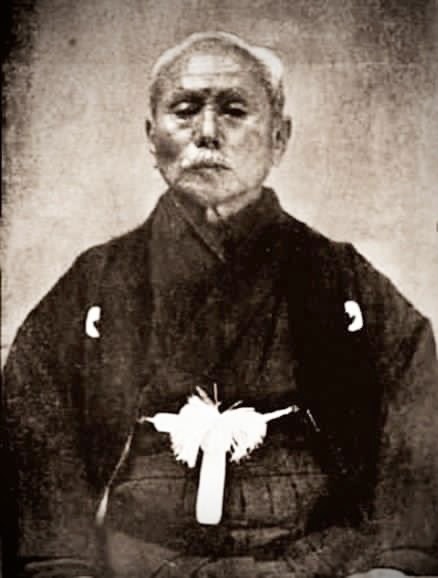
 Shotokan Karate has the most envied lineage of all karate styles. Firstly, includes the most famous karate master of all time, Funakoshi Gichin Sensei - the founder of modern karatedo, who brought karate from Okinawa to mainland Japan and popularized it. Secondly, the man who professionally spread karate across the world and made it scientifically based, Nakayama Masatoshi Sensei. And, lastly, Asai Tetsuhiko Sensei who revolutionized JKA style Shotokan, expanding it and returning it to its pre-WW2 Budo/Bujutsu origins.


Of course, one could add many other Shotokan masters under Funakoshi Sensei and Nakayama Sensei; however, I am naturally focusing on my particular Shotokan lineage: as I naturally can't comment on others.


Haters of Shotokan are simply haters because of the styles global unparalleled success and, as already stated, its incredible lineage: not only through a few masters, BUT MANY.


Here's some images today to celebrate our collective Shotokan lineage. OSU!

Funakoshi Gichin Sensei, Funkoshi Yoshitaka (Gigo) Sensei and Nakayama Masatoshi Sensei, with Master Funakoshi's grandson.

Funakoshi Sensei completing the execution of yoko-enpi.

Gichin Funakoshi Sensei was not only the founder of Shotokan but of modern day karate.

Nakayama Masatoshi Sensei professionally and scientifically spread karate across the world.

Nakayama Sensei also developed karate competition, but unlike mainstream competition nowadays, it was based on destructive waza. 

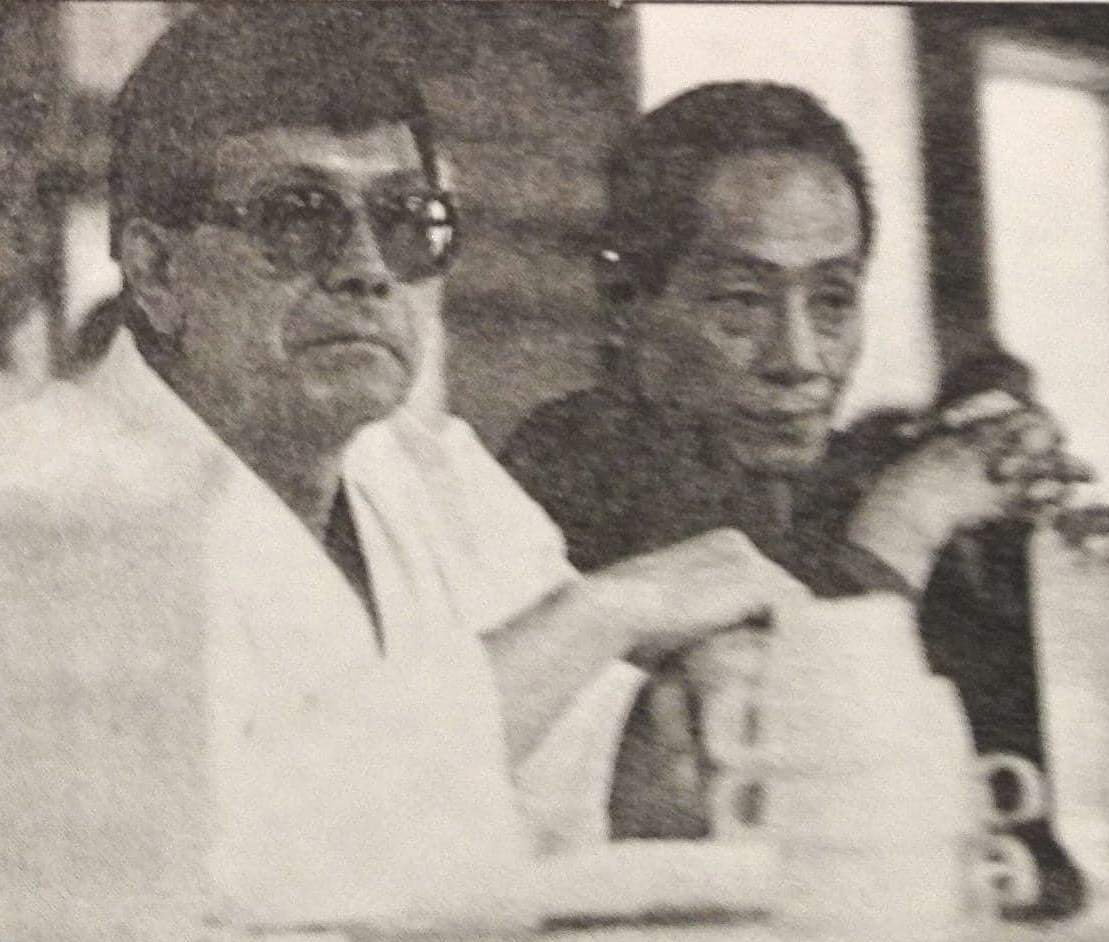
Asai Tetsuhiko Sensei with his main senpai, Okazaki Teruyuki Sensei.

Asai Sensei's hidari jodan mae-geri kekomi. A technique he could use from any position.

Asai Sensei and Osaka Yoshiharu: 'Best Karate: Kumite 2'. Osaka Sensei is another important mentor.


                                  © Andre Bertel. Oita City, Japan (2022).